
ETF Investing in Germany for Expats (2026): What Most People Get Wrong

Table of Contents
Introduction: ETF Investing in Germany for Expats
Germany made ETF investing more accessible than ever.
Today, many expats living in Germany invest monthly through ETF savings plans and long-term portfolios.
At first glance, the strategy can look simple:
Buy an ETF. Invest regularly. Wait long term.
But many people eventually realize that ETF investing in Germany for expats involves much more than choosing a single fund.
Topics such as:
- taxes
- pension gaps
- liquidity
- risk tolerance
- financial structure
- and long-term flexibility
can all influence how efficient an investment strategy may become over time.
⚠️ One of the biggest misunderstandings is believing that buying ETFs automatically means having a complete financial plan.
In reality, many experienced investors eventually realize something important:
ETFs may be part of the strategy — but they are usually not the entire strategy itself.
This article explains some of the most common mistakes, misunderstandings, and overlooked factors around ETF investing in Germany for expats in 2026.
Quick Answer: What Do Many Expats Get Wrong About ETF Investing in Germany?
Many expats assume that:
- buying ETFs automatically equals financial planning
- taxes only matter after selling investments
- one ETF strategy works for everyone
- investing alone automatically solves future retirement concerns
In reality, ETF investing in Germany for expats often involves additional considerations such as:
- German taxation rules
- retirement planning
- liquidity management
- investment timeline
- risk profile
- and long-term flexibility
This is one reason why many investors eventually move from random investing toward more structured financial planning.
Why ETF Investing Became So Popular in Germany
Over the last few years, ETF investing became significantly more popular in Germany.
Several factors contributed to this trend:
- rising awareness around investing
- inflation concerns
- easier access to broker platforms
- social media education
- growing interest in long-term investing
Today, many internationals living in Germany explore ETFs because they are commonly associated with:
- diversification
- accessibility
- lower costs
- globally diversified exposure
- long-term investing approaches
💡 For many expats, ETFs feel simpler and more flexible than traditional financial products.
Why Expats Often Feel Attracted to ETFs
Many internationals prefer investment structures that feel:
- globally diversified
- relatively flexible
- internationally accessible
- not concentrated in a single country
This is especially common among:
- tech workers
- engineers
- freelancers
- internationally mobile professionals
- high-income employees
However, simplicity can sometimes create overconfidence.
⚠️ Many people underestimate how much long-term investing also depends on structure, taxes, and financial planning.
Mistake #1: Thinking ETF Investing Is the Entire Financial Strategy
One of the biggest misunderstandings around ETF investing in Germany for expats is believing that buying ETFs automatically means having a complete financial structure.
This is extremely common.
Many people:
- open a broker account
- start a monthly ETF savings plan
- buy one global ETF
- assume the topic is solved
But long-term financial planning usually includes much more than selecting investments.
Long-Term Wealth Building Usually Includes Multiple Areas
A broader financial structure may also involve:
- retirement planning
- liquidity management
- emergency savings
- insurance protection
- tax awareness
- timeline planning
- financial flexibility
⚠️ ETFs may be one component of a strategy.
They are not automatically the entire strategy itself.
Mistake #2: Ignoring ETF Taxes in Germany
Another common issue is taxation.
Many people begin investing without fully understanding how ETF taxes in Germany work.
This is especially common among expats because taxation frameworks differ significantly between countries.
Germany Applies Taxation Rules to Investment Income
Germany may apply taxation rules to:
- capital gains
- dividends
- investment income
- certain ETF structures
There are also specific taxation rules that may apply to accumulating ETFs and unrealized gains in certain situations.
💡 This is one reason why many expats eventually realize that investing and tax awareness cannot always be separated.
Why Taxes Matter More Than Many Investors Expect
Many people focus heavily on:
- ETF performance
- historical returns
- fund selection
while underestimating how factors such as:
- taxation
- fees
- structure
- withdrawal timing
may influence long-term efficiency over time.
⚠️ Tax treatment depends on individual circumstances and may change in the future.
Mistake #3: Underestimating Risk Tolerance
Social media often makes investing look emotionally easy.
Reality is usually more complex.
Many investors only discover their true risk tolerance during:
- market crashes
- economic uncertainty
- strong volatility
- negative headlines
Risk Tolerance Is Highly Individual
A strategy that feels comfortable for:
- a 24-year-old student
may feel completely different for:
- a freelancer
- a parent
- someone planning to buy property
- someone with unstable income
This is one reason why one-size-fits-all investing rarely works well long term.
💡 Emotional comfort plays an important role in investment consistency.
Mistake #4: Thinking ETFs Automatically Solve Retirement Planning
Some investors assume that regular ETF investing alone automatically solves future retirement concerns.
However, retirement planning in Germany can become significantly more complex than many people initially expect.
What Is the Pension Gap?
The pension gap refers to the possible difference between:
- future retirement income
and - future living expenses
Several factors may influence this:
- inflation
- career interruptions
- rising living costs
- healthcare expenses
- contribution years
- lifestyle expectations
⚠️ The size of a pension gap differs significantly from person to person.
Why ETF Investors Still Need Structure
Some people invest consistently for years but still lack:
- retirement coordination
- liquidity planning
- withdrawal strategy
- financial flexibility
- long-term structure
This is one reason why many financial professionals separate:
- investing
from - financial planning
even though they are connected.
Mistake #5: Focusing Only on Returns
One of the most common questions online is:
“Which ETF gives the best return?”
While performance matters, many experienced investors eventually realize that:
- consistency
- structure
- emotional discipline
- diversification
- timeline planning
often matter just as much.
The Problem With Return Obsession
Many investors:
- constantly switch ETFs
- chase trends
- compare portfolios daily
- react emotionally to volatility
This can create emotional investing behavior instead of long-term consistency.
💡 Long-term investing usually requires patience more than excitement.
Mistake #6: Having No Liquidity Strategy
Another common issue in ETF investing in Germany for expats is investing without considering liquidity needs.
Some people invest aggressively while keeping almost no emergency savings.
Others keep excessive amounts of cash and never invest at all.
Usually, balance matters.
Why Emergency Liquidity Still Matters
Emergency savings may help cover:
- relocation costs
- unexpected expenses
- visa uncertainties
- job transitions
- medical situations
This becomes especially important for expats because many internationals do not have the same local support systems as people living in their home country.
⚠️ Investment timelines and liquidity needs should usually work together.
Mistake #7: Following Generic Financial Advice Online
A large amount of investing content online is:
- highly simplified
- influencer-driven
- emotionally marketed
- US-focused
But Germany has its own:
- tax framework
- pension system
- financial regulations
- retirement structures
This creates confusion for many internationals consuming investment content from multiple countries simultaneously.
Why Generic Investing Advice Often Fails
Two people with:
- the same salary
- the same ETF
- the same monthly investment amount
may still have completely different financial situations depending on:
- taxes
- retirement goals
- family structure
- risk profile
- future plans
- liquidity needs
💡 Financial planning is highly individual.
ETF Investing vs Financial Planning
One of the biggest misconceptions online is treating investing and financial planning as identical concepts.
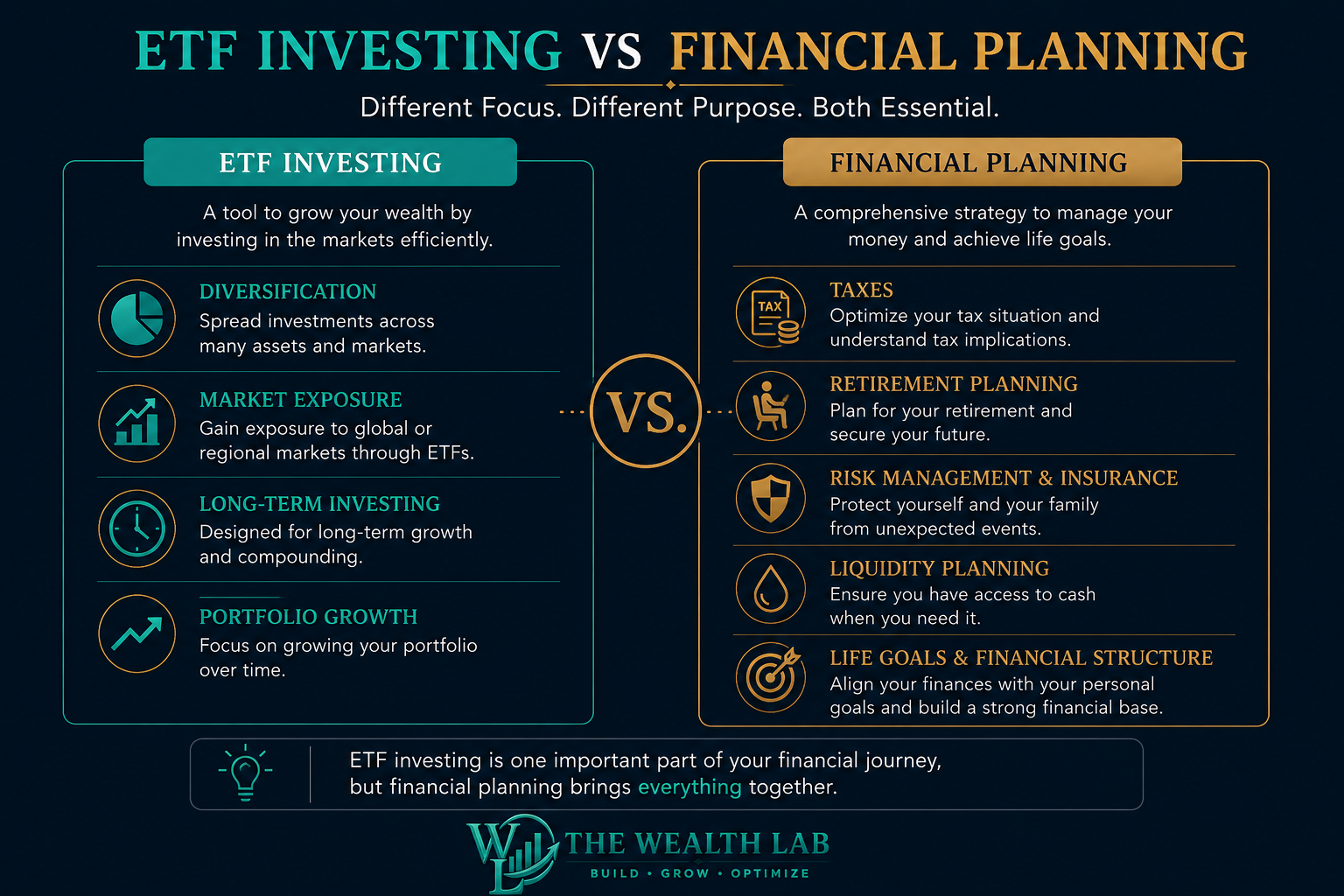
ETF investing and financial planning serve different purposes
especially for expats building long-term wealth in Germany (Source reference).
They are connected — but not identical.
ETF Investing Usually Focuses On:
- diversification
- portfolio exposure
- market participation
- long-term investing
Financial Planning Usually Looks Broader
Long-term financial planning may also involve:
- taxes
- retirement planning
- liquidity
- protection strategies
- long-term flexibility
- financial coordination
⚠️ Investment products alone rarely create financial clarity.
Why Many Expats Eventually Seek Professional Guidance
Many internationals begin investing independently.
Over time, however, broader questions often appear:
- “Is my structure efficient?”
- “How does this affect retirement?”
- “Am I overlooking taxes?”
- “How much liquidity should I keep?”
- “What happens if I leave Germany later?”
These questions often move beyond simple ETF selection.
Financial Complexity Usually Increases Over Time
Financial planning often becomes more complex when:
- income increases
- family situations change
- property enters the picture
- retirement planning becomes more important
- tax exposure increases
This is one reason why many expats eventually prefer personalized financial guidance instead of relying only on generalized internet content.
What Many Experienced Investors Eventually Realize
After years of investing, many people realize something important:
The challenge usually is not finding the perfect ETF.
The challenge is building a financial structure that remains sustainable long term.
This may include:
- flexibility
- emotional manageability
- liquidity
- tax awareness
- retirement coordination
- long-term consistency
💡 Structure often matters more than short-term performance.
Key Takeaways
✔️ ETF investing in Germany for expats involves more than selecting one ETF
✔️ Taxes may influence long-term investment efficiency
✔️ Risk tolerance is highly individual
✔️ Retirement planning and investing are connected but not identical
✔️ Emotional discipline often matters more than trends
✔️ Liquidity and flexibility remain important for expats
✔️ One-size-fits-all investing approaches rarely fit everyone
✔️ Long-term structure often matters more than short-term performance
Final Thoughts
ETF investing became increasingly popular among expats in Germany for good reason.
Many people appreciate ETFs because they are commonly associated with:
- diversification
- accessibility
- flexibility
- long-term investing
At the same time, long-term financial planning in Germany often involves much more than simply selecting investments.
Topics such as:
- taxes
- retirement planning
- liquidity
- risk tolerance
- financial structure
- long-term flexibility
may all play important roles depending on the individual situation.
Because every expat situation is different, many people first try to understand the broader financial landscape before making long-term financial decisions.
Disclaimer: This article is for informational purposes only and does not constitute financial, tax, or legal advice. Financial decisions should always consider individual circumstances and personal risk tolerance.
Frequently Asked Questions About ETF Investing in Germany for Expats
Can foreigners legally invest in Germany?
Yes. Many internationals and expats living in Germany can legally invest through German broker platforms and investment accounts. However, tax treatment and investment suitability may depend on individual circumstances and residency status.
What are the most popular investments for expats in Germany?What are the most popular investments for expats in Germany?
Many expats in Germany explore:
ETFs
retirement planning solutions
diversified portfolios
real estate investments
long-term savings plans
The best structure depends on factors such as timeline, goals, liquidity needs, and risk tolerance.Do expats pay taxes on ETFs in Germany?
Germany has taxation rules that may apply to ETF investments, dividends, and capital gains. Certain ETF structures may also be affected by specific German tax regulations.
What is Vorabpauschale in Germany?
Vorabpauschale is a German taxation mechanism that may apply to certain accumulating ETFs. It was designed to tax parts of unrealized investment gains under specific conditions.
Is ETF investing in Germany safe for beginners?
ETFs are often considered accessible for beginners because they can provide diversification and long-term market exposure. However, every investment involves risk, and investment decisions should always consider individual financial situations.
How much should you invest monthly in Germany?
There is no universal number. Monthly investment amounts depend on:
income
living costs
emergency savings
retirement goals
investment timeline
personal risk toleranceWhy do many expats in Germany still have a pension gap?
A pension gap may happen when future retirement income is lower than future living expenses. Inflation, rising costs, career interruptions, and retirement structure all may influence long-term outcomes.
What mistakes do beginners make when investing in Germany?
Common mistakes may include:
ignoring taxes
investing without liquidity planning
following generic online advice
misunderstanding risk tolerance
focusing only on returns
investing without long-term structureCan expats continue investing if they leave Germany later?
This depends on factors such as tax residency, broker policies, and future country regulations. Many expats consider flexibility and international mobility when building long-term financial structures.
Leave a Comment
Have a question or experience to share? Drop a comment below.
Leave a Comment