
Maternity Leave Germany Expats:
Pregnancy, Health Insurance, and Family Benefits Explained (2026)
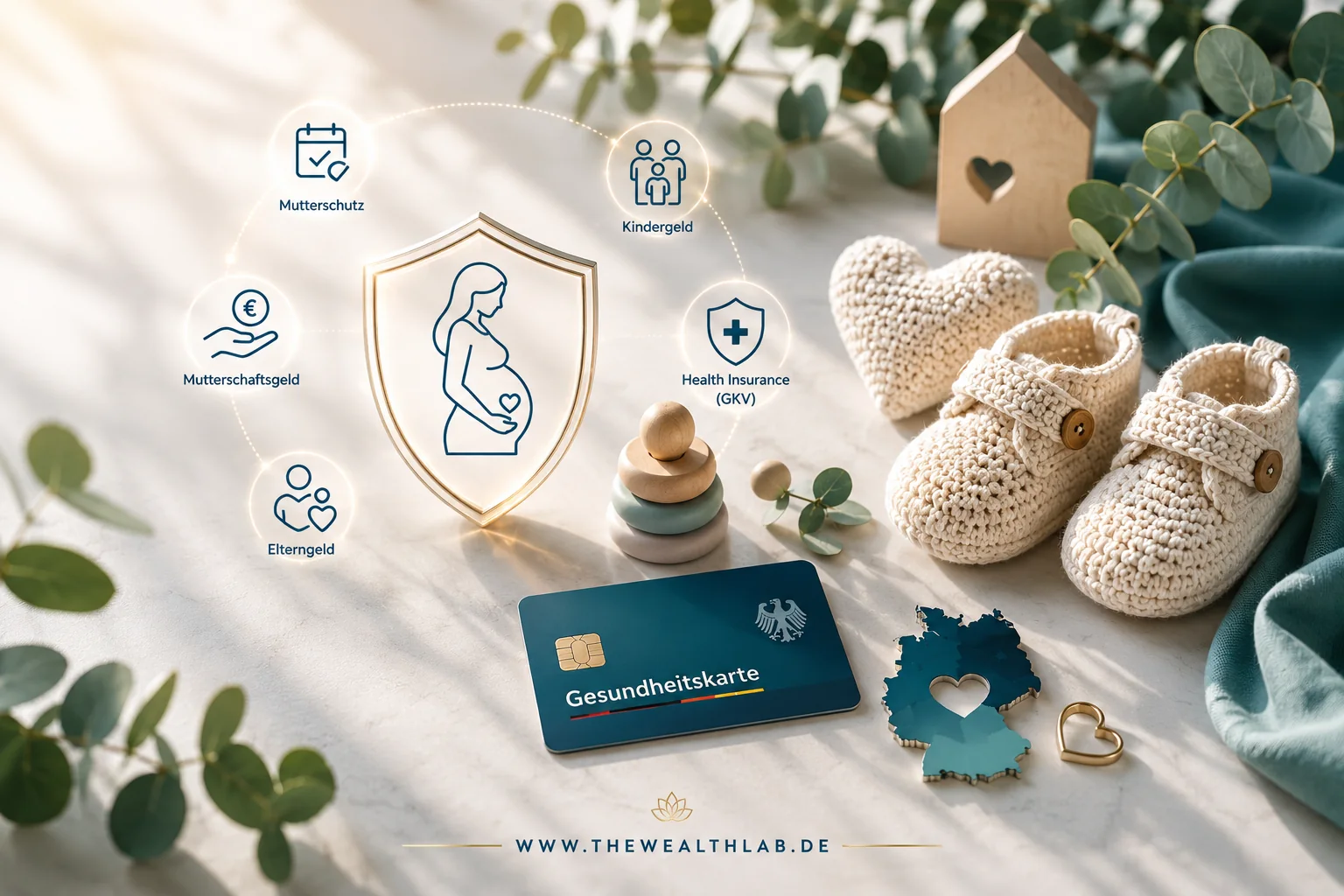
Table of Contents
Introduction: Maternity Leave Germany Expats
Having a baby in Germany can be exciting, emotional, and financially confusing at the same time — especially for expat families who are navigating the German system for the first time.
Between Mutterschutz, Mutterschaftsgeld, Elterngeld, Kindergeld, and health insurance rules, it is easy to feel overwhelmed. Each system has its own purpose, eligibility rules, application process, and financial impact.
For many expat families, maternity leave in Germany is not only about taking time off work. It is also about understanding how your income may change, how your health insurance works during pregnancy, whether your child can be covered through Familienversicherung, and how parental leave may affect your long-term financial planning.
This guide explains the key financial and insurance-related points expat families should understand before and after the birth of a child in Germany. It also shows why pregnancy is often a good moment to review your family’s wider financial strategy — including insurance protection, pension planning, investment capacity, and long-term wealth building.
Quick Summary: What Expat Families Receive in Germany
Germany offers one of the most comprehensive family support systems in Europe. Depending on your employment status, income, residence permit, and health insurance, you may be entitled to several important benefits before and after the birth of your child.
Here is a simplified overview of the main benefits expat families should know:
| Benefit | What It Provides |
|---|---|
| Mutterschutz | Protected maternity leave before and after birth |
| Mutterschaftsgeld | Income replacement during the maternity protection period |
| Elterngeld | Financial support for parents after birth |
| Kindergeld | Monthly child benefit payment |
| Familienversicherung | Free health insurance coverage for eligible family members under GKV |
| Elternzeit | Job protection while taking parental leave |
👶 For many expat families, these benefits can provide significant financial support during the first year after a child is born.
However, government benefits are only one part of the picture. The arrival of a child often affects household income, retirement planning, insurance needs, savings goals, and long-term wealth-building strategies.
Understanding how these systems work together can help families make more informed financial decisions before and after a major life event.
How Health Insurance in Germany Covers Pregnancy
For most expat families, one of the first questions after discovering a pregnancy is whether their health insurance will cover the medical costs associated with pregnancy, childbirth, and postnatal care.
The good news is that Germany offers comprehensive pregnancy-related healthcare. However, the level of coverage and the rules that apply depend largely on whether you are insured through Germany’s statutory health insurance system (GKV) or private health insurance (PKV).
For families covered by statutory health insurance (GKV), pregnancy-related medical care is generally included as part of the standard health insurance package. This typically includes:
• Prenatal check-ups and examinations
• Ultrasound scans recommended during pregnancy
• Midwife support before and after birth
• Hospital delivery costs
• Postnatal medical care for the mother
• Necessary medical treatment related to pregnancy and childbirth
Shortly after pregnancy is confirmed, your doctor will issue a Mutterpass. This important document records all medical examinations and pregnancy-related information and should be carried throughout the pregnancy.
For expats covered by private health insurance (PKV), pregnancy care is usually covered as well. However, the scope of coverage depends on the specific insurance contract. Benefits, reimbursement rules, and additional services may vary between providers and tariff structures.
Because health insurance plays a major role during pregnancy, many expat families use this period as an opportunity to review their overall insurance strategy, particularly when preparing for long-term family responsibilities and future financial goals.
Understanding how your health insurance works before the birth can help you avoid unexpected surprises and make more informed decisions as your family grows.
Maternity Leave Germany Expats Need to Understand: The Mutterschutz Period
One of the most important aspects of maternity leave Germany expats need to understand is the country’s maternity protection system, known as Mutterschutz.
Mutterschutz is designed to protect both the mother and the child before and after birth. During this period, pregnant employees benefit from special legal protections, including protection from dismissal and restrictions on working conditions.
For most employees in Germany, the maternity protection period begins six weeks before the expected birth date and continues for eight weeks after birth.
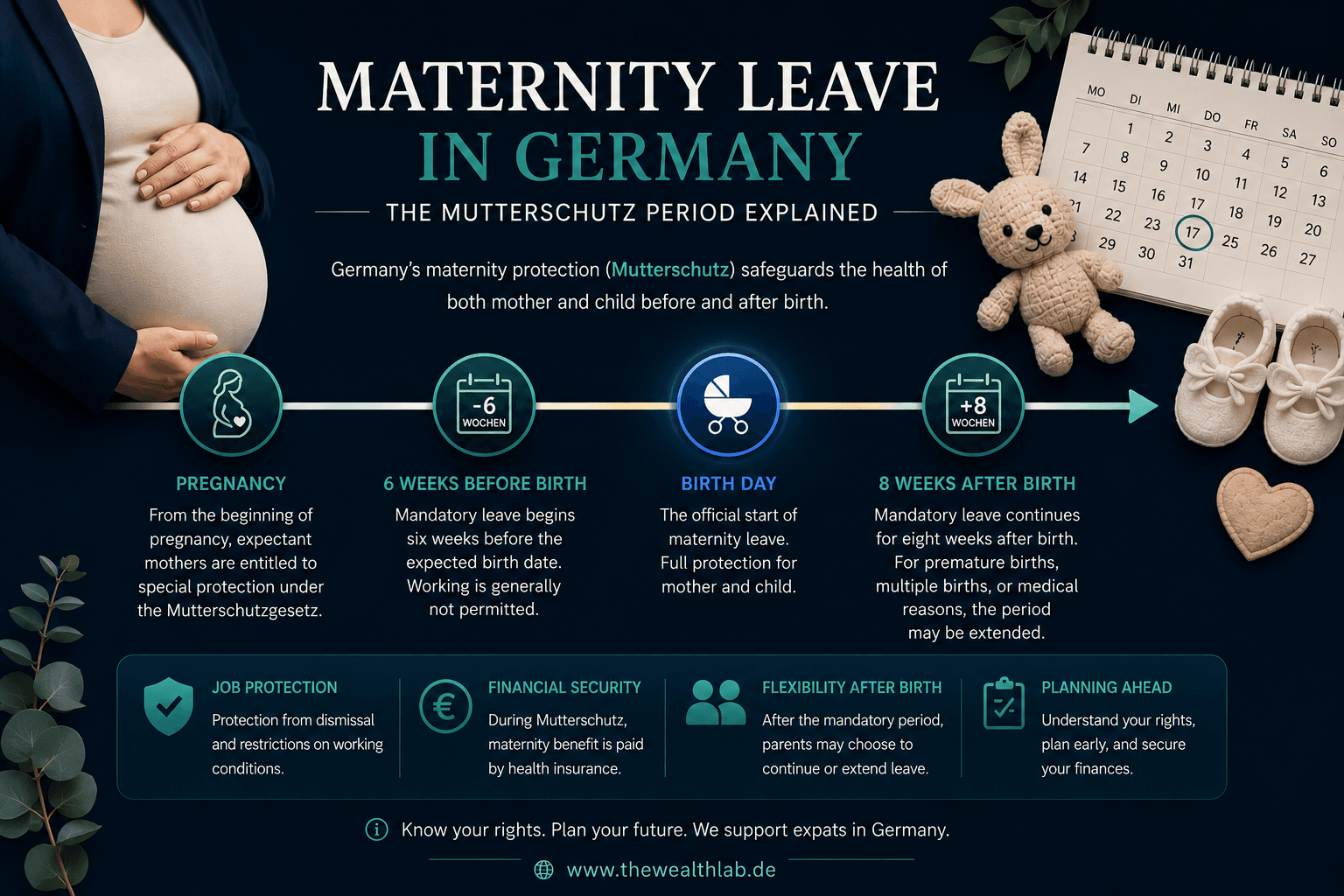
For premature births, multiple births, or certain medical circumstances, the post-birth protection period may be extended.
During the six weeks before birth, pregnant employees can choose whether they want to continue working. However, after childbirth, the protection period becomes mandatory and employers are generally not allowed to require employees to return to work.
This protection applies regardless of nationality. Expats working in Germany under a valid employment contract are generally covered by the same maternity protection rules as German employees.
Beyond protecting employment rights, Mutterschutz also serves an important financial purpose. During this period, eligible employees may receive financial support through Mutterschaftsgeld Germany, helping to replace income while they are away from work.
For many expat families, understanding how Mutterschutz works is the first step in planning for the financial impact of a growing family. It is also an ideal time to review existing insurance coverage, emergency savings, and long-term family financial goals.
Mutterschaftsgeld Germany: How Income Is Replaced During Maternity Leave
For many families, one of the biggest concerns during maternity leave is how household income will change while a parent is away from work.
This is where Mutterschaftsgeld Germany plays an important role.
Mutterschaftsgeld is a maternity benefit designed to support eligible employees during the Mutterschutz period. Its purpose is to help replace income while the mother is protected from working before and after childbirth.
For employees covered by Germany’s statutory health insurance system (GKV), maternity payments are typically made through a combination of health insurance benefits and employer contributions. Together, these payments often allow employees to receive an amount that is close to their regular net income during the maternity protection period.
The exact amount depends on several factors, including employment status, health insurance type, and previous earnings.
For many expat families, this financial support provides valuable stability during the first weeks surrounding childbirth and helps reduce the immediate pressure of lost income.
However, it is important to understand that Mutterschaftsgeld is only one part of Germany’s broader family support system. Once the maternity protection period ends, many parents transition to Elterngeld Germany expats often rely on to support parental leave and childcare responsibilities during the months that follow.
Example: Emma and David
Emma and David are expecting their first child in Germany.
Emma works full-time and is covered by statutory health insurance, while David is also employed.
Before learning about Germany’s maternity benefits, they were concerned about how they would manage their expenses during the weeks surrounding the birth.
After reviewing their situation, they discovered that Emma could continue receiving income during the Mutterschutz period through the combination of maternity benefits and employer support.
Understanding these benefits allowed them to focus less on short-term financial uncertainty and more on preparing for their growing family.
For many expat families, taking time to understand maternity benefits before the birth can make financial planning significantly easier and reduce unnecessary stress during an already busy period.
Mutterschaftsgeld Germany: How Income Is Replaced During Maternity Leave
While Mutterschutz provides legal protection during maternity leave, many families are equally concerned about their finances during this period.
This is where Mutterschaftsgeld Germany becomes particularly important.
Mutterschaftsgeld is a maternity benefit that helps replace income while eligible employees are away from work during the maternity protection period. For many expat families, it provides an important layer of financial security during the weeks before and after childbirth.
For employees covered by Germany’s statutory health insurance system (GKV), maternity payments are typically funded through a combination of health insurance benefits and employer contributions. In many cases, this allows employees to receive an amount that is close to their regular net income during the Mutterschutz period.
The exact amount depends on several factors, including employment status, previous earnings, and the type of health insurance coverage.

Understanding how Mutterschaftsgeld Germany works can help families prepare for upcoming expenses and avoid unnecessary financial stress during an already significant life transition.
Example: Emma and David
Emma and David are expecting their first child in Germany.
Emma works full-time and is covered by statutory health insurance, while David is also employed.
Before learning about Germany’s maternity benefits, they were concerned about how they would manage their household expenses during the weeks surrounding the birth.
After reviewing their situation, they discovered that Emma could continue receiving income throughout the Mutterschutz period through the combination of maternity benefits and employer support.
This gave them more confidence to focus on preparing for their child rather than worrying about short-term income loss.
Many expat families find that understanding maternity benefits early helps them create a more realistic financial plan before the baby arrives.
Mutterschaftsgeld provides valuable support during the maternity protection period. However, once this period ends, many families begin relying on Elterngeld Germany expats can receive to support parental leave and childcare responsibilities during the months that follow.
Elterngeld Germany Expats Need to Understand
After the Mutterschutz period ends, many families transition to a different form of financial support known as Elterngeld.
For many parents, Elterngeld Germany expats can receive becomes one of the most important sources of financial support during the first months after the birth of a child.
The purpose of Elterngeld is to help parents spend time with their newborn while reducing the financial impact of temporarily working fewer hours or taking time away from work altogether.
The amount a family receives depends on several factors, including previous income, employment status, and the chosen Elterngeld model. In general, Elterngeld replaces a percentage of the income that was earned before the birth of the child.
Because every family’s situation is different, the exact amount can vary significantly from one household to another.
Why Elterngeld Matters for Long-Term Financial Planning
Many parents focus only on the monthly Elterngeld payment. However, the arrival of a child often has a much bigger impact on a family’s financial future.
Career breaks, reduced working hours, childcare responsibilities, and changes in household income can all influence long-term financial goals.
This is why many families use this period as an opportunity to review their overall financial strategy, including retirement planning, insurance protection, emergency savings, and future investment goals.
Example: Sophia and Michael
Sophia and Michael welcomed their first child while living and working in Germany.
Sophia planned to stay at home for several months after the birth, while Michael intended to reduce his working hours temporarily to spend more time with their newborn.
Although they understood the basics of Elterngeld, they quickly realised that the larger challenge was understanding how this temporary change in income could affect their long-term financial plans.
By reviewing their family finances early, they were able to create a more realistic budget, maintain their savings goals, and avoid making short-term decisions that could negatively affect their future financial security.
For many expat families, Elterngeld provides valuable support during the first year after birth. However, it works best when it is viewed as part of a broader family financial plan rather than a standalone benefit.
Familienversicherung Germany Explained: Free Health Insurance for Eligible Family Members
One of the most valuable benefits of Germany’s statutory health insurance system is Familienversicherung, which allows eligible family members to be covered without paying separate health insurance contributions.
For many expat families, this benefit becomes particularly relevant after the birth of a child.
Under certain conditions, a non-working spouse or partner may be covered through the working partner’s statutory health insurance policy without additional monthly premiums.
In addition, children can often be included in the family’s health insurance coverage at no extra cost, making Familienversicherung one of the most financially attractive features of the German healthcare system.
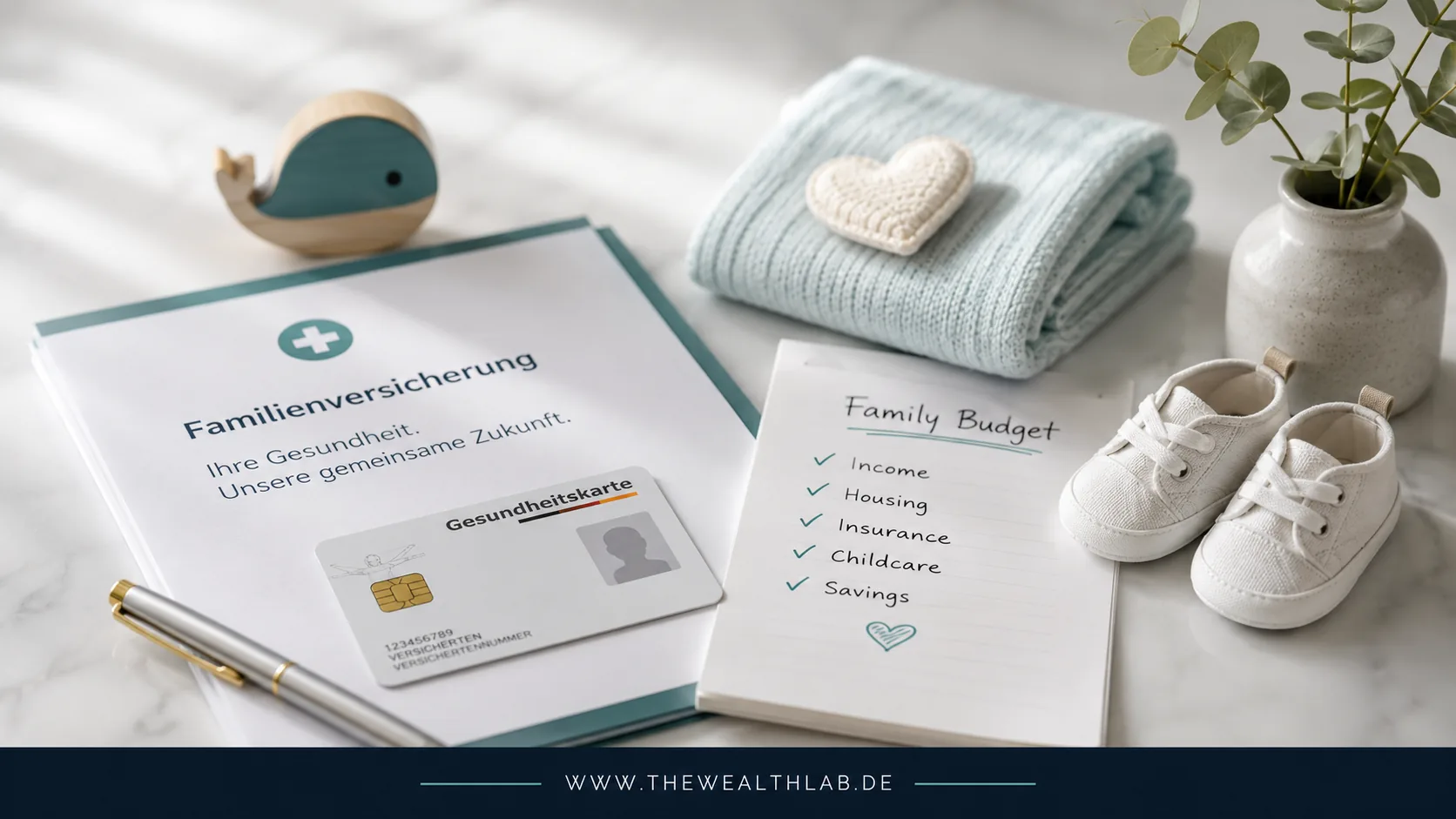
For growing families, this can significantly reduce monthly expenses during a period when household budgets are already adjusting to new responsibilities and childcare costs.
However, eligibility depends on several factors, including income levels, employment status, and the type of health insurance held by both parents.
Because of these requirements, families should review their health insurance situation before the birth of a child rather than waiting until afterwards.
Why This Matters for Expat Families
For many expats, health insurance decisions made before marriage or before having children may no longer be the most suitable option once family circumstances change.
A growing family often creates new financial priorities, including healthcare costs, income protection, retirement planning, and future education savings.
Understanding how Familienversicherung works can help families make more informed decisions and avoid unexpected insurance costs during an important life transition.
GKV vs PKV During Pregnancy: What Expat Families Should Know
Choosing the right health insurance becomes even more important when starting a family in Germany.
For many expats, pregnancy is the moment when they begin looking more closely at the differences between Germany’s statutory health insurance system (GKV) and private health insurance (PKV).
Both systems provide access to high-quality healthcare, but they can differ significantly when it comes to family planning, long-term costs, and health insurance coverage for spouses and children.
One of the biggest advantages of statutory health insurance is the possibility of Familienversicherung, which may allow eligible spouses and children to be covered without additional monthly contributions.
Private health insurance works differently. In most cases, each family member requires their own insurance policy and premium. As a result, the long-term cost of healthcare can change significantly once children become part of the family’s financial picture.
Why Pregnancy Often Triggers an Insurance Review
Many expats choose their health insurance based on their situation as a single professional.
However, marriage, children, parental leave, and changes in household income can all affect whether an existing insurance setup still supports a family’s long-term goals.
Pregnancy often becomes the first moment when families start asking important questions such as:
• How will our healthcare costs change after the birth?
• Can our child be covered through our existing insurance?
• How will parental leave affect our overall financial situation?
• Does our current insurance strategy still fit our growing family?
Because every family’s circumstances are unique, there is rarely a one-size-fits-all answer. What works well for one household may not be the most suitable solution for another.
This is why many families choose to review their insurance strategy alongside their broader financial planning when preparing for a child.
Kindergeld Germany Expats Can Claim
One of the most well-known family benefits in Germany is Kindergeld.
Kindergeld is a monthly payment designed to support families with the costs of raising children. For many expat families, it becomes an important part of their overall financial planning during the first years of parenthood.
Unlike maternity benefits and parental leave payments, Kindergeld is not directly linked to employment status. Instead, it is intended to provide ongoing financial support for eligible families living in Germany.
Although the monthly amount may not cover all childcare expenses, it can help families offset some of the costs associated with raising a child while supporting broader financial goals such as emergency savings, education planning, and long-term investing.
Why Kindergeld Matters Beyond Monthly Income
Many families view Kindergeld simply as an additional monthly payment.
However, over time, these payments can become a meaningful contribution toward a child’s future.
Some families choose to use Kindergeld to build an emergency fund, while others allocate it toward long-term investment goals or future education expenses.
When combined with other family benefits, Kindergeld can play an important role in strengthening a family’s overall financial position.
Elternzeit: Job Protection During Parenthood
While Elterngeld provides financial support, Elternzeit provides something equally valuable: time.
Elternzeit is the legal right of parents in Germany to take time away from work to care for their child while maintaining important employment protections.
For many families, this period allows parents to focus on their growing family without immediately returning to full-time work.
Because parental leave often results in temporary changes to household income, it is important to consider how this period fits into a family’s broader financial strategy.
For many expat families, decisions about parental leave influence retirement planning, insurance needs, savings goals, and future investment capacity.
When planning maternity leave Germany expats should look beyond short-term benefits and consider how parental leave may affect their long-term financial objectives.
Financial Planning Before Your Child Arrives
Having a child affects far more than a family’s monthly budget.
It often changes insurance requirements, retirement planning priorities, savings rates, and long-term wealth-building goals.
For this reason, many families begin reviewing their financial situation before the birth rather than waiting until afterwards.
A few important areas to consider include:
• Reviewing existing insurance coverage
• Building or strengthening an emergency fund
• Understanding how maternity and parental benefits may affect household cash flow
• Reviewing retirement planning contributions
• Adjusting long-term investment goals
• Planning for future childcare and education costs
Families who prepare early are often in a stronger position to navigate the financial changes that come with parenthood.
If you are currently reviewing your family finances, you may also find our guide to long-term retirement planning useful.
Families interested in building long-term wealth may also benefit from understanding how investing can support future financial goals.
Planning a Baby in Germany?
👶 Becoming a parent affects far more than your monthly budget.
Health insurance decisions, retirement planning, income protection, investment capacity, and long-term financial goals often change after the arrival of a child.
As independent financial consultants, we help expat families understand how major life events can affect their overall financial strategy.
Whether you are reviewing insurance options, planning for parental leave, or thinking about your family’s long-term future, having a clear financial plan can provide valuable peace of mind.
Key Takeaways for Expat Families
Understanding maternity leave Germany expats need to navigate involves much more than simply learning about maternity benefits.
From pregnancy Germany health insurance considerations to Mutterschaftsgeld Germany, Elterngeld Germany expats can receive, parental leave, and long-term family financial planning, multiple systems work together to support families during an important stage of life.
While government benefits can provide valuable support, long-term financial security often depends on the decisions families make around insurance, retirement planning, investing, and wealth building.
Taking time to understand these areas before your child arrives can help create a stronger financial foundation for your growing family.
FAQ: Maternity Leave Germany Expats
Can expats receive Elterngeld in Germany?
Many expats living and working in Germany may be eligible for Elterngeld, depending on their residence status and individual circumstances.
Does pregnancy health insurance coverage differ between GKV and PKV?
Yes. Pregnancy Germany health insurance coverage can differ depending on whether you are insured through statutory health insurance (GKV) or private health insurance (PKV). Families should review their individual insurance situation before the birth of a child.
Can my child be covered under my health insurance?
In many cases, children may be eligible for coverage through Familienversicherung under Germany’s statutory health insurance system. Eligibility depends on the family’s individual circumstances.
Is Kindergeld available for expat families?
Many expat families living in Germany may qualify for Kindergeld, provided they meet the relevant eligibility requirements.
Should we review our financial plan before having a child?
Yes. Parenthood often affects insurance needs, retirement planning, investment goals, and overall financial strategy. Reviewing these areas before the birth can help families make more informed decisions.
About the Author
Sara Rahimi is an independent financial consultant helping expats in Germany navigate insurance, retirement planning, investments, and long-term wealth-building strategies.
Through The Wealth Lab, she creates educational content designed to help international professionals make more informed financial decisions and build a stronger financial future in Germany.
Disclaimer
The information provided in this article is for educational purposes only and does not constitute financial, tax, legal, medical, insurance, or immigration advice. While every effort has been made to ensure accuracy, German laws, regulations, benefits, and eligibility requirements may change and may vary depending on individual circumstances. The Wealth Lab provides independent financial planning services for expats in Germany and does not provide tax advisory, legal advisory, immigration services, or government benefit application services. Before making decisions regarding health insurance, family benefits, taxation, residency status, investments, or retirement planning, readers should consult the appropriate qualified professional and relevant authorities.
Leave a Comment
Have a question or experience to share? Drop a comment below.
Leave a Comment